
By Abraham Becerra, Owner and Principal Contractor · July 20, 2026
Why they form here
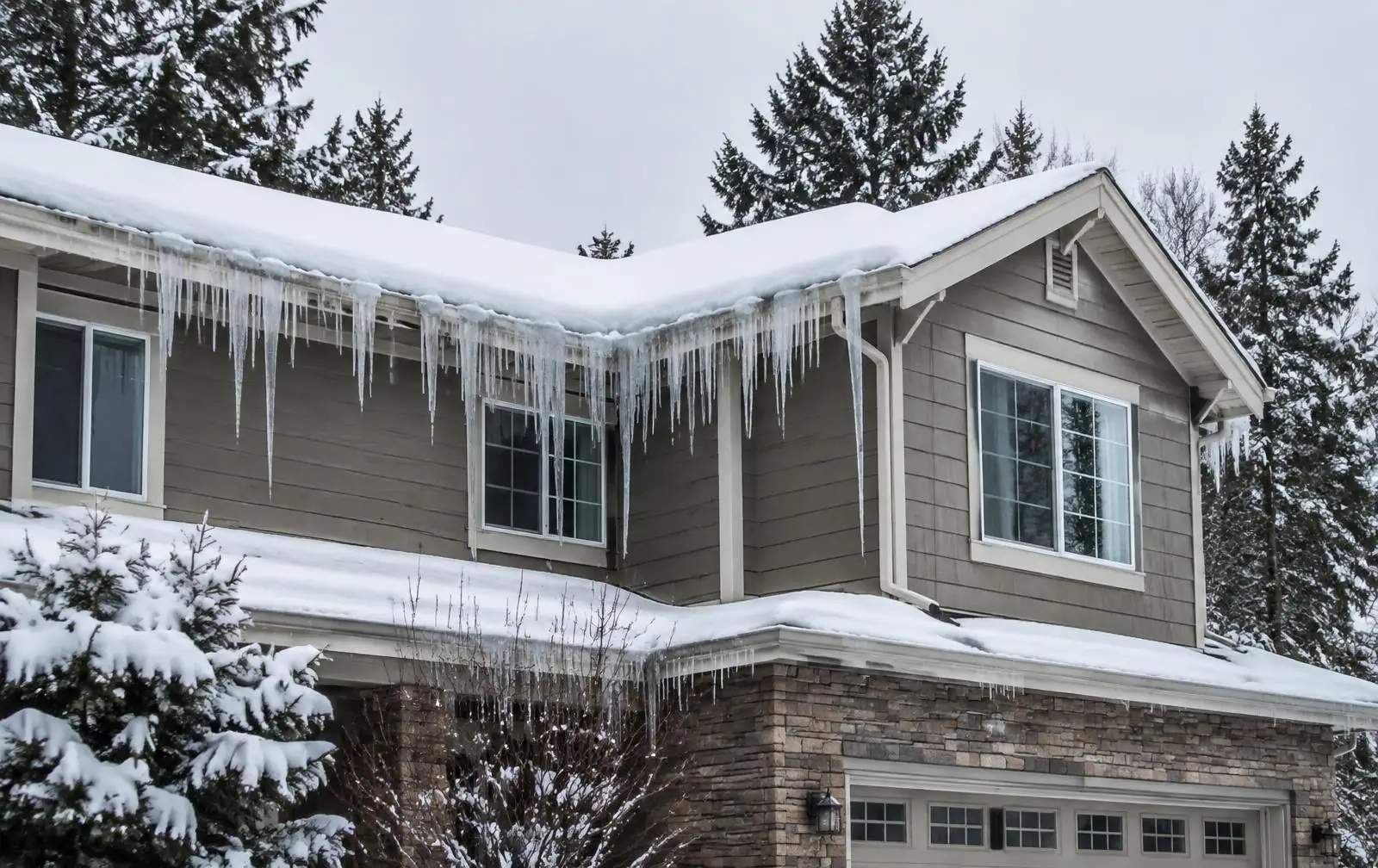
Snow on the upper roof melts when heat escapes from the attic or when strong sun warms the deck, then refreezes at the eaves, which stay cold because they overhang the walls. A sunny afternoon followed by a hard freeze overnight is the classic Colorado pattern. Dams build after several melt and freeze cycles, most often after heavy snow in the winter months.
The damage is inside first
Water does not fall straight down. It travels along roof decking, rafters and top plates, then appears as a stain on a ceiling, a damp wall below a window, a swollen window sill or a musty smell in an attic corner. By the time a stain shows, the insulation is usually wet and the framing has held moisture for days.
What to do right after a leak
Contain the water, keep the area dry and photograph the damage before cleaning. Have the attic dried and the moisture measured rather than assumed. Do not chip ice off a roof with a pick or run a steamer across the shingles; the roof is damaged more often than the ice is removed.
Repair in the right order
The interior cannot be closed until the source is handled.
- Clear the gutters and downspouts and remove roof snow safely from the ground
- Dry the attic and framing, then verify with a moisture reading
- Replace wet insulation and any sagging or crumbling drywall
- Repair stained or swollen trim and repaint after the substrate is dry
- Address the attic insulation, air sealing and soffit to ridge ventilation
- Add ice and water protection at the eaves when the roof is next replaced
Insurance and records
Standard homeowner policies in Colorado usually cover water damage from ice dam backup, though the roof repair itself may be treated differently. Make temporary repairs, keep receipts, and document the damage with dated photographs before cleanup.
Common Questions About This Topic
How do I know I have an ice dam?
A thick ridge of ice at the eaves with icicles behind it, plus new ceiling stains or a damp wall below a window in winter, are the usual signs. Check the attic for wet insulation too.
Can an ice dam damage a house badly?
Yes. Water running up under shingles wets the roof deck, insulation and framing, which can lead to ceiling collapse, rotted sheathing and mold if it is left for weeks.
How do you stop ice dams from coming back?
Reduce heat loss into the attic with air sealing and adequate insulation, keep soffit to ridge ventilation working, and clear gutters and roof snow during the season. Ice and water protection at the eaves helps when the roof is replaced.
Does homeowner insurance cover ice dam damage?
Standard Colorado policies usually cover water damage caused by ice dam backup. Temporary repair receipts should be kept, and the roof itself may be handled differently, so confirm with your carrier.